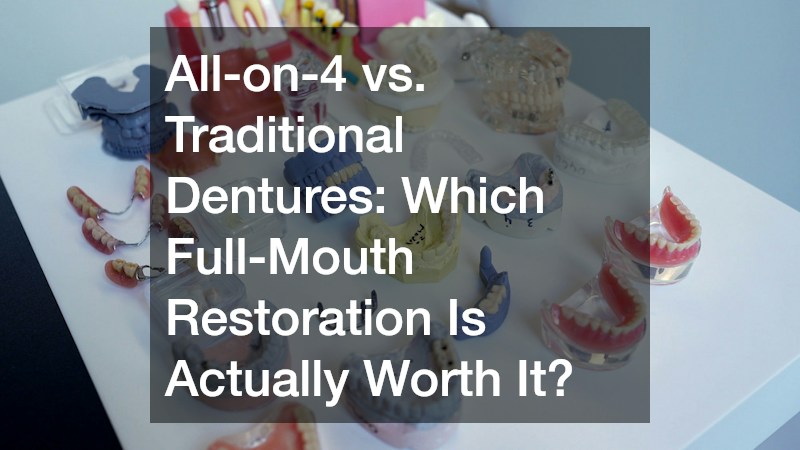

Dental restorations are a crucial solution for individuals seeking to restore full oral health and function. Among these solutions, All-on-4 dental implants and traditional dentures represent two significant pathways. Both options provide substantial benefits for those needing comprehensive mouth restoration while posing unique considerations.
Choosing between All-on-4 and traditional dentures depends on various factors, including cost, comfort, function, and long-term health impacts. Patients must understand these variables to make informed decisions. This article explores both options in-depth to provide a clear comparison of their attributes.
How Do All-on-4 and Traditional Dentures Work?
All-on-4 Procedure Explanation
The All-on-4 implant procedure is an innovative technique involving the surgical insertion of four titanium implants into the jawbone. These implants act as sturdy anchors for a full arch of replacement teeth, delivering durable and stable restoration results. Although the initial process is more invasive than fitting traditional dentures, its long-term outcomes are notable with higher satisfaction rates. Moreover, this method typically involves less bone grafting than traditional implant approaches.
All-on-4 implants offer patients a fixed option that supports normal eating and speaking activities seamlessly. This technique’s design ensures a high success rate, maintaining dental health over many years. Additionally, the All-on-4 solution minimizes the need for additional future interventions, attributing to its long-term appeal.
Traditional Dentures Overview
Traditional dentures are prosthetic devices crafted to replace missing teeth and are fitted over the gums. They consist of acrylic resin materials combined with metal for strength and are customized to fit the individual’s mouth contours. The process of obtaining dentures begins with impressions and measurements taken by a dental professional, leading to the creation of individualized equipment.
Caring for traditional dentures involves regular cleaning and maintenance procedures to ensure longevity and functionality. Although less expensive upfront, they may require adjustments over time due to natural changes in the mouth’s shape. Denture users must continually replace or adjust their dentures to ensure comfort and usability.
What Are the Differences in Cost Between All-on-4 and Traditional Dentures?
Initial Costs Comparison
The initial cost for All-on-4 implants can be substantially higher than traditional dentures, reflecting the complexity of the surgery and materials used. Patients typically invest in four dental implants, creating a stable base for fixed prosthetics, along with surgical fees. In contrast, traditional dentures are less costly initially, offering an economically feasible solution for full-mouth restoration.
Material costs also contribute to the disparities in price, with All-on-4 employing high-quality and durable materials. These materials ensure long-term satisfaction and minimal required maintenance. However, those opting for traditional dentures benefit from a lower upfront financial obligation, making them a popular initial choice.
Long-Term Financial Considerations
While the initial cost of All-on-4 can seem steep, potential savings can materialize through reduced long-term maintenance. All-on-4 users often experience fewer necessary adjustments and replacements compared to traditional denture wearers. This can translate into cost savings over time, offsetting the initial investment.
Conversely, traditional dentures may incur ongoing costs related to adjustments, maintenance, and possible replacements. Over the years, these recurring expenses can surpass the initial price difference when compared to All-on-4 implants. Therefore, evaluating the long-term economic impact is critical for those considering full-mouth restoration options.
Which Option Offers Better Comfort and Functionality?
Comfort Levels and User Experience
Many users report higher levels of comfort with All-on-4 implants due to their fixed nature and close resemblance to natural teeth. These implants eliminate concerns about slipping and provide a secure feeling during everyday activities. Traditional dentures, while improved over the years, can sometimes cause discomfort or irritation, especially if poorly fitted.
User experiences are subjective; however, the absence of dietary restriction and inconvenience often makes All-on-4 the preferred option for comfort. Traditional dentures, being easily removable, may appeal to those who prioritize flexibility. Yet, they might require adjustments to achieve maximum comfort over time, unlike the reliably stable All-on-4 options.
Functionality in Everyday Activities
The use of All-on-4 provides individuals with a restoration closely matching the functionality of natural teeth. This alignment results in enhanced capability during activities such as chewing and speaking, critical aspects of daily life. Denture wearers, on the other hand, might face limitations requiring them to avoid certain foods that challenge their prosthetics.
All-on-4 allows users to engage confidently with their favorite foods without the fear of detachment, a significant advantage for those placing high value on dietary freedom. Furthermore, it facilitates clearer speech due to its fixed placement, unlike traditional dentures that might shift. Consequently, for optimal daily functionality, All-on-4 is often heralded as the superior option by users.
In conclusion, choosing between All-on-4 and traditional dentures for full-mouth restoration involves weighing upfront costs against long-term benefits. All-on-4 offers enhanced comfort, functionality, and oral health benefits, with a higher initial cost that could equate to savings over time. Traditional dentures, on the other hand, present a lower upfront financial commitment, with higher maintenance considerations.
Ultimately, the decision rests on individual priorities, weighing immediate affordability against prolonged satisfaction and fewer lifestyle limitations. Consulting with dental professionals is crucial in making the most informed choice. Therefore, understanding personal goals and financial preparedness helps guide the decision towards the most worthwhile investment for a healthier, more fulfilling smile.