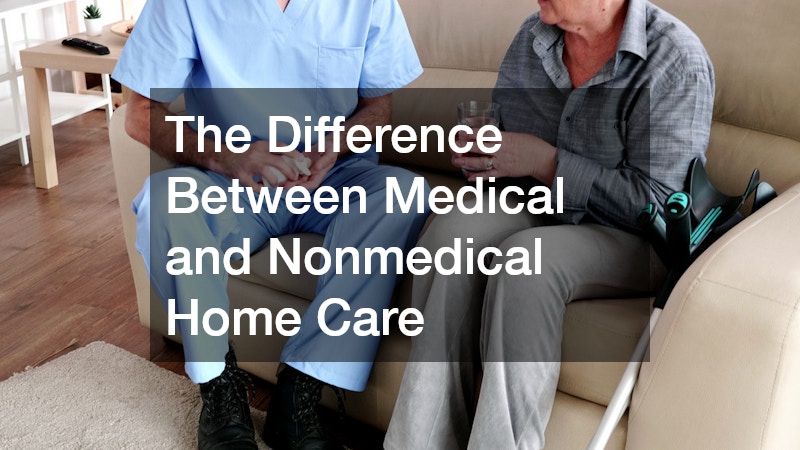

Home care options have expanded, offering individuals the opportunity to receive care directly at home. Understanding the difference between medical and nonmedical home care is essential for making informed decisions. Each provides valuable support, whether through skilled medical attention or daily living assistance. Join us in exploring these distinctions and their benefits for those opting for home-based care. Medical home care, or skilled care at home, involves healthcare services by professionals in the patient’s home, often prescribed by a doctor after surgery, illness, or for chronic condition management. It offers an alternative to hospital stays, leading to cost benefits and enhanced recovery. Medical home care bridges hospital and home-based services. Medical home care involves registered nurses, physical and occupational therapists, medical social workers, and home health aides. They offer direct care, medication administration, and patient progress monitoring, creating individualized care plans for each patient’s needs. Services include skilled nursing care, physical, speech, and occupational therapy, vital signs monitoring, and patient education. These promote better health outcomes and enhance life quality at home. Healthcare providers in medical home care must hold qualifications and certifications to ensure quality care. This framework protects patients and upholds care standards. Benefits include convenience, psychological comfort, family involvement, and reduced hospital costs. Collaboration in adapting care plans ensures continuous, personalized care. Nonmedical home care aids with daily activities rather than medical needs, helping seniors or those with chronic illnesses maintain quality of life. Services include companionship, housekeeping, and personal hygiene support, emphasizing comfort and dignity. Caregivers, though not medically trained, provide effective support for daily activities as personal care aides, homemakers, and companions. Services include personal hygiene support, meal preparation, housekeeping, companionship, and transportation assistance. Caregivers require targeted training in first aid, CPR, communication, and understanding client needs to provide a safe environment. Benefits include personalized attention and independence. Affordability and careful caregiver selection help fulfill companionship and support needs. Medical care requires strict regulations and certified professionals, while nonmedical care has less stringent oversight. Medical care offers health condition monitoring and treatment, whereas nonmedical care focuses on daily living assistance and emotional support. Medical home care may be covered by insurance, Medicare, or Medicaid; nonmedical care is usually a private-pay service. Medical care targets those with health conditions, while nonmedical care supports the elderly needing daily assistance. Effective care plans consider medical evaluations and client preferences, adapting to changing needs. Identify if care is needed for health management or daily activities, consulting professionals for necessary interventions. Consider financial resources and the costs of medical and nonmedical care options, with careful long-term planning. Seek healthcare professionals’ insights to tailor care plans and recommendations based on health concerns. Discuss client preferences for daily routines and caregiving features, ensuring compatibility and satisfaction. Synthesize needs assessments, costs, professional advice, and preferences, using community resources for decision support. Technological innovations, like wearable health trackers, enhance care dynamics and enable proactive management. Aging populations and longer life expectancies expand service offerings and demand customized care models. Policy changes influence home care service delivery, with government initiatives supporting more home-based care options. Telehealth enables remote communication and care delivery, supporting medical management and virtual assistance. Increased demand offers growth opportunities, with technology-driven care models and community partnerships expanding service reach. Understanding medical versus nonmedical home care is vital for informed decisions regarding care needs. Medical care suits those needing clinical interventions, while nonmedical care supports daily living activities. Care decisions should consider specific health requirements, preferences, and financial aspects to ensure optimal support. 1. What is Medical Home Care?
1.1 Definition and Overview
1.2 Types of Healthcare Professionals Involved
1.3 Common Medical Home Care Services
1.4 Qualifications and Certifications Needed
1.5 Benefits and Expectations
2. What is Nonmedical Home Care?
2.1 Definition and Overview
2.2 Types of Nonmedical Caregivers Involved
2.3 Common Nonmedical Home Care Services
2.4 Training and Skills Required
2.5 Advantages and Considerations
3. Key Differences Between Medical and Nonmedical Home Care
3.1 Regulatory and Licensing Differences
3.2 Scope of Services Provided
3.3 Financial Aspects and Insurance Coverage
3.4 Client Demographics and Needs
3.5 Setting Appropriate Care Plans
4. How to Choose Between Medical and Nonmedical Home Care?
4.1 Assessing Individual Needs
4.2 Evaluating Cost Considerations
4.3 Consulting Healthcare Providers
4.4 Understanding Personal Preferences
4.5 Making Informed Decisions
5. Future Trends in Home Care Services
5.1 Technological Advancements
5.2 Demographic Shifts and Their Impact
5.3 Policy Changes and Their Implications
5.4 Integrating Telehealth Solutions
5.5 Opportunities for Growth and Development